
Cato Ups Store Closures to 120 This Year as Off-Price Rivals Pull Away
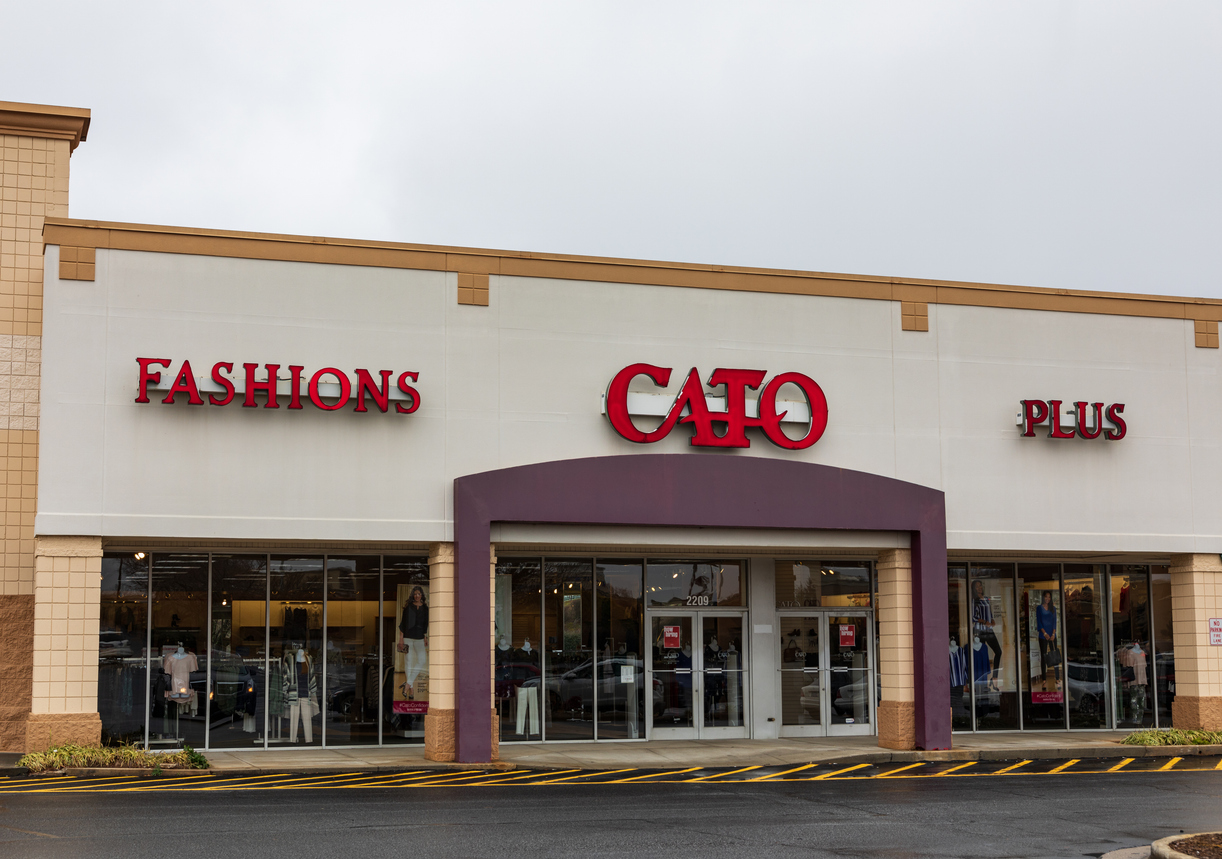
The Cato Corporation said September 18 it will close roughly 70 additional underperforming stores during the third and fourth quarters of 2026, pushing its full fiscal-year closure count to approximately 120 locations. That's about 11% of the value-priced women's apparel chain's 1,057-store fleet across 31 states, according to a company release. Every closing location is at the natural end of its lease term, the Charlotte, North Carolina-based retailer said, meaning no early-termination costs and no rent owed beyond 2026: only an estimated $1.0 million to $1.3 million in exit costs for signage, fixtures and store-system returns.
Cato has been a fixture of Southern and Southeastern strip centers for eight decades. Founded in 1946 and still run by the Cato family, the company built its business on value-priced women's fashion sold through small-format stores anchoring neighborhood and community centers rather than enclosed malls. It now operates three banners, the namesake Cato chain, the plus-size and contemporary-leaning It's Fashion, and the boutique-styled Versona, though it did not break out how the new closures split among them. The fleet has already been shrinking: Cato ended its second quarter with 1,057 stores, down from 1,101 a year earlier, after closing eight stores in the period alone.
The math behind the exits
The closures follow a rough second quarter. Sales fell 6% to $163.9 million from $174.7 million a year earlier, with same-store sales down 3.7%. Net income dropped to $1.1 million, or $0.06 per diluted share, from $6.8 million, or $0.35 per share, a year ago. Gross margin slipped to 32.8% from 36.2%, while SG&A crept up to 33.0% of sales from 32.8%. Over the first six months of fiscal 2026, sales of $333.3 million were down 2.9%, but net income actually rose to $10.5 million from $10.1 million, a sign of cost discipline even as the top line stalls.
The closures stem from Cato's annual lease-renewal review, which typically covers about a third of its stores each year. Marginal locations often got another lease term in the past; this year, management decided the math no longer works.
A value retailer squeezed from both sides
What makes Cato's slide notable is that it isn't happening across the off-price sector: rivals are thriving in the same value-conscious environment Cato says is hurting it. Ross Stores posted second-quarter sales up 13% and comps up 10%, crediting the gain largely to traffic. TJX's Marmaxx division (TJ Maxx and Marshalls) logged a 1% comp gain on 3% net sales growth, per both companies' second-quarter results. That divergence points to something specific to Cato, not a broad pullback in discretionary apparel spending.
Chairman, President and CEO John Cato framed the decision as pragmatic rather than alarming. "We do not expect these marginal stores to improve appreciably. As a result, we are closing more stores than expected this year," he said, adding that management believes "closing these additional stores will have a positive impact on our operating results in fiscal 2027 and beyond." On the pressures driving the underlying softness, Cato said results reflect "the continued pressure on our customers' discretionary income, which is being negatively impacted in part by persistent inflation, higher fuel prices and continued elevated interest rates," and that he expects that pressure "to continue for the foreseeable future."
Worth watching
For landlords with Cato, It's Fashion or Versona in their tenant mix, the lease-end structure is the most useful data point: this is a controlled pruning of the weakest third of the portfolio, not a wave of early terminations, so backfill planning can run on a normal lease timeline rather than an emergency one. The contrast with Ross and TJX also matters: it suggests strong off-price co-tenants aren't seeing the same erosion, so the read-through for broader strip-center health should stay narrow rather than sector-wide. Six-month net income improved despite the sales decline, reading as disciplined pruning rather than a company in crisis, unlike other 2026 closure stories involving chains in real distress. With no banner-level breakdown disclosed, it's worth watching Cato's next 10-Q for which of its three concepts absorbs the bulk of the cuts, since that will shape where in secondary and tertiary Southern markets space starts coming back to market.
See which of your centers Cato Fashions fits
Give Brandmarch a shopping center and it returns a ranked list of brands that belong there, with the reasoning. Cato Fashions is already scored against 30,300 properties.