Red Robin Sells 116 Restaurants for $96 Million as Debt-Paydown Push Nears the Finish Line
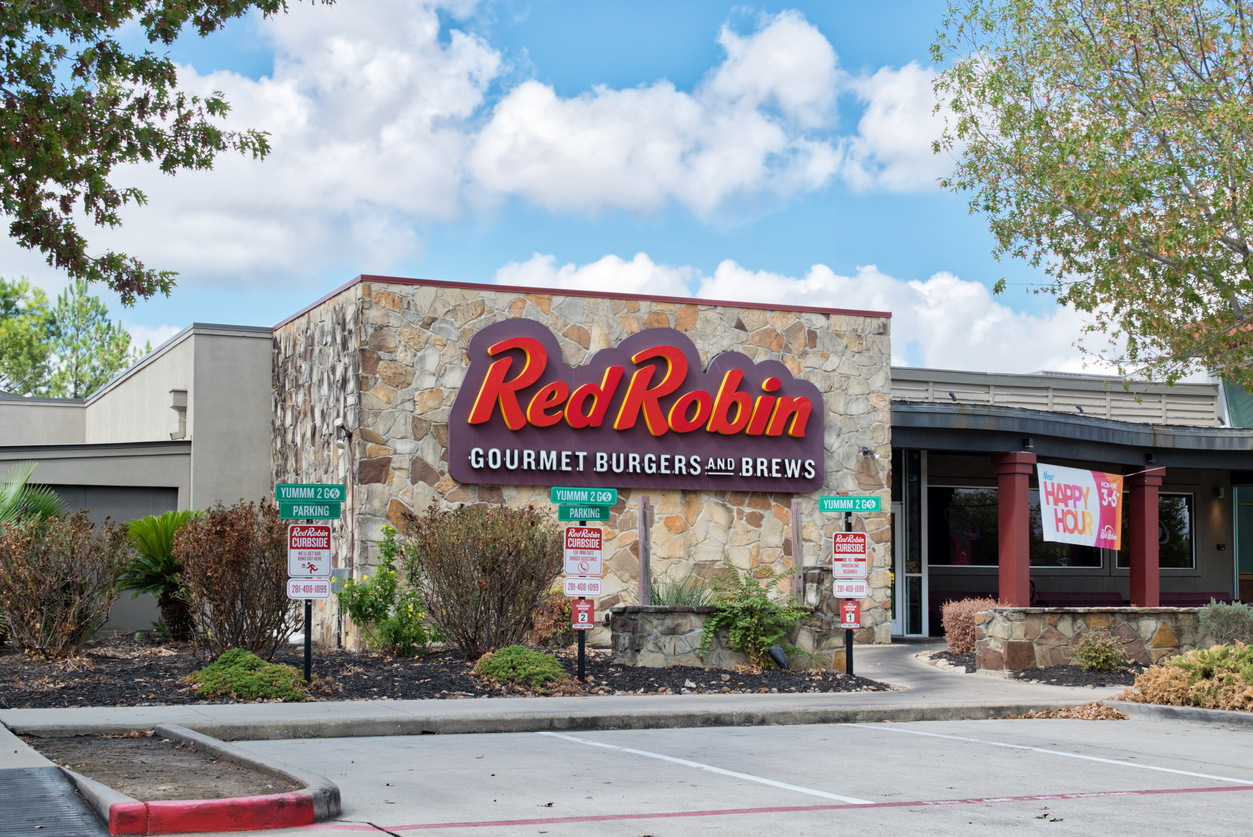
Red Robin has closed out nearly all of a three-part refranchising round it launched in May, handing 108 company-owned restaurants to franchise operators for $89.4 million as of September 1. Eight more locations, worth $6.6 million, are expected to close by fiscal year-end, the burger chain said in a press release. Two of the restaurants already transferred sit in Bucks County, Pennsylvania, near Oxford Valley Mall in Middletown Township and in Warrington Township. LevittownNow reported this week that both have moved from corporate ownership to franchisee Op Burgers LLC, one of three buyers in the deal.
Red Robin traces its roots to a 1940s Seattle tavern renamed for a song and built around a burger menu; the company took the Red Robin name in 1969 and had more than 175 restaurants by 1986. Today the publicly traded chain (Nasdaq: RRGB) operates 475 locations across the United States and British Columbia, and has spent the past year on a turnaround plan, the First Choice Plan, launched in July 2025 to fix traffic, margins and a debt load that had dragged on the stock.
Three deals, one buyer pool
The refranchising round came together in stages. Evergreen Dining bought 30 restaurants in Washington and western Idaho for $23.5 million in a deal that closed in May. Op Burgers followed with the largest piece, 69 restaurants spread across Kentucky, Indiana, Maryland, Ohio, North Carolina, Pennsylvania, South Carolina and Virginia, for $62.5 million. Kuber Oregon LLC and Kuber Washington LLC picked up the remaining 17 units in the Pacific Northwest for $10 million. The three deals were announced across May and June, with closings continuing into the fall.
The numbers behind the paydown
Red Robin's second-quarter results, reported in August, show why the company is trading restaurants for cash. Total revenue came in at $278 million, down $6.1 million from a year earlier, a decline the company attributed mainly to the restaurant closures and sales already underway. Comparable sales rose 1.3%, excluding a loyalty-program accounting shift, and traffic was down just 20 basis points, what the company called its best traffic performance since the first quarter of 2023 and a result that outpaced the broader industry by 40 basis points. Restaurant-level operating margin reached 14.7%, up 20 basis points year over year and the highest second-quarter margin the company has posted in four years, helped by roughly 50 basis points of labor efficiency gains. Adjusted EBITDA fell to $18.9 million from a year earlier, largely on higher marketing spend behind the chain's Big Yum! value platform. Liquidity stood at $48 million, including $23 million in cash.
Once the final eight restaurants close, Red Robin will have shifted its mix from roughly 81% company-owned at the end of fiscal 2025 toward a company-owned share closer to 65%, with total franchised units rising to around 206 against roughly 263 company-operated restaurants.
"These transactions will advance our efforts to refinance our existing debt and increase our financial flexibility," President and CEO Dave Pace said in the company's release announcing the deal's completion. On the second-quarter earnings call, Pace also said the company has "deliberately paused further activity to ensure the current deals are done right before revisiting additional refranchising opportunities," a signal that this wave of asset sales is close to its natural end point, at least for now.
Worth watching
A few things stand out for landlords and brokers with Red Robin paper in their portfolios. The buyer pool is regionally concentrated rather than scattered: Op Burgers took a Mid-Atlantic-to-Southeast block, and two separate operators split the Pacific Northwest between them. That suggests the territories were negotiated as coherent packages, giving landlords a clearer read on their new counterparty across a cluster of sites. The rationale matters too. This is a debt-paydown story, not a store-performance story, and the traffic and margin trends suggest the remaining company-owned base is healthier than the shrinking topline alone would suggest. Pace's language about a deliberate pause is worth watching closely. Liquidity is still thin at $48 million, a small cushion for a chain this size, and a resumption of refranchising activity later in the fiscal year would not be surprising if debt reduction stays the priority.
See which of your centers Red Robin fits
Give Brandmarch a shopping center and it returns a ranked list of brands that belong there, with the reasoning. Red Robin is already scored against 30,300 properties.